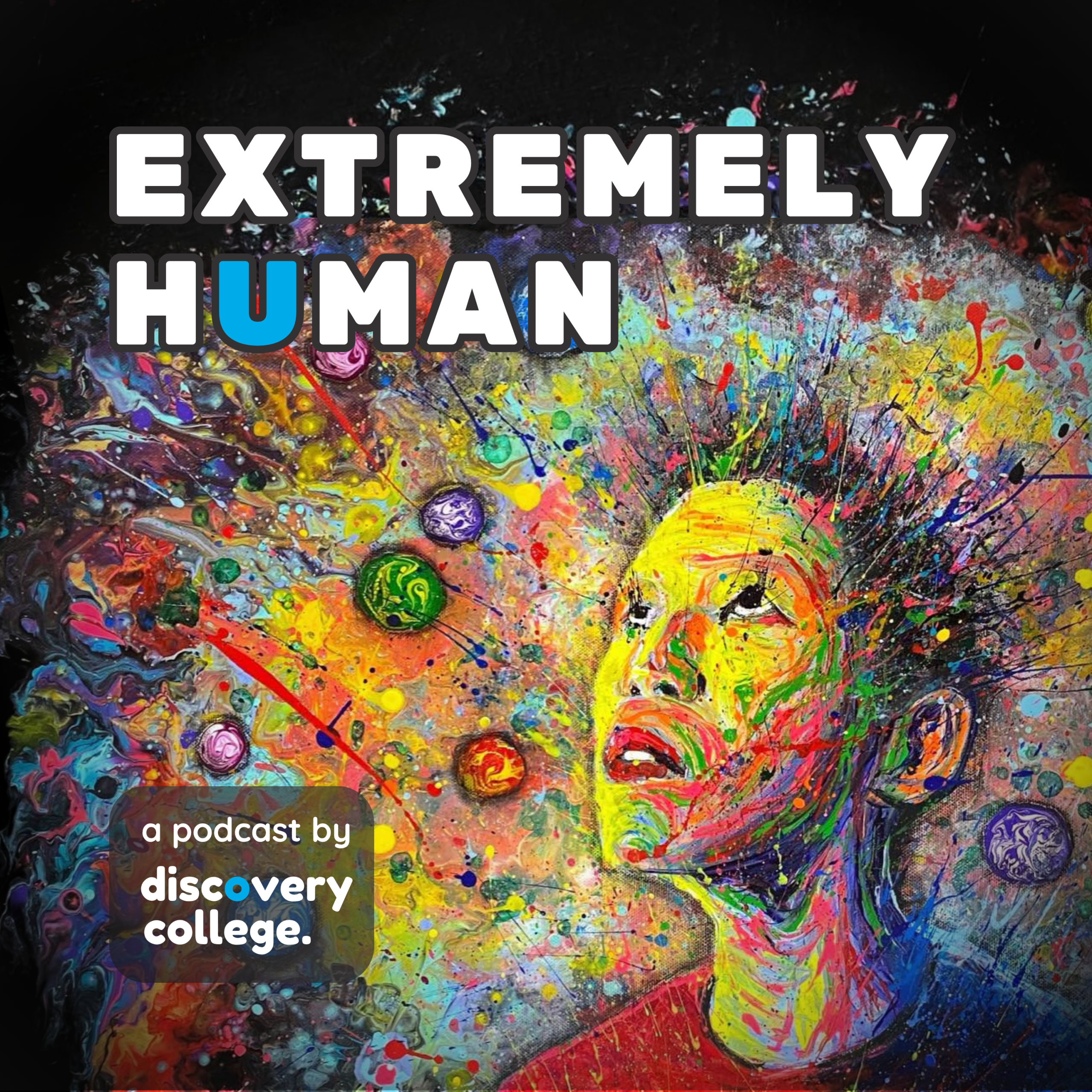
What is narrative therapy, and how did it begin? We’re joined by David Denborough, who shares the history of narrative practices, the difference it’s made in people’s lives, and the story of a beautiful group called Power to Our Journeys.
Connect with dd (David)
Email: [email protected]
Power to Our Journeys
Learn more about the Power to Our Journeys group
https://dulwichcentre.com.au/wp-content/uploads/2021/12/Power-to-Our-Journeys-by-Brigitte-Sue-Mim-and-Veronika-1.pdf
Explore the Dulwich Centre
The home of narrative therapy + so many great resources
www.dulwichcentre.com.au
Free course: What is narrative practice?
Curious about narrative therapy? Take a look at this free introduction course:
https://dulwichcentre.com.au/courses/what-is-narrative-practice-a-free-course/
“Sneaky Poo” + understanding tricky thoughts
Looking at externalisation
https://dulwichcentre.com.au/in-our-own-wayshttps://dulwichcentre.com.au/beating-sneaky-poo-2.pdf
Stories from around the world
Including the CARE Counsellors of Malawi + the “Bundle of Sticks”
https://dulwichcentre.com.au/in-our-own-ways
Come and listen with:
Lucy (She/Her) – A big fan of ice cream and storytelling
Rachel (She/Her) – Social Worker, Dialogical Practitioner, mad footy fan and wildly passionate about transforming the culture of mental health services to be person-led and human rights informed.
Incredible artwork @sharleencu_art
Shout out to Amplify for welcoming us into their recording studio
EPISODE TRANSCRIPT – Power To Our Journeys
[00:00:00] Lucy: This podcast has conversations around different mental health experiences that may be distressing for some people. If that doesn’t feel like something you want to explore today, you might want to visit another podcast and come back to us another time.
[00:00:13] Rachel: discovery college acknowledges the traditional owners of country throughout Australia and recognises their continuing connection to lands, waters and community. We pay our respects to Aboriginal and Torres Strait Islander cultures and to the elders, past and present. They have never ceded sovereignty.
[00:00:31] David: Sometimes when I’m in stressful situations and the voices are playing up, having the sticks next to me is really significant. They make me think of the people of Malawi overcoming enormous obstacles in their battles with HIV aids and they give me courage to keep going.
They remind me that when you’re up against something very big, then it’s important to take things just one step at a time. They reconnect me to the importance of every little thing, how every small stick is important, because it’s together we are strong.
[00:01:10] Lucy: I’m Lucy
[00:01:10] Rachel: And I’m Rachel and we’re the hosts of the Extremely Human podcast.
[00:01:14] Lucy: Sometimes we move through big human experiences that others might not understand, like psychosis, grief, addiction, euphoria, or moments that feel completely unreal.
[00:01:26] Rachel: On Extremely Human, we hear from people who’ve been there and share what they’ve learnt along the way. Together we ask, how can we meet the full range of human experience with kindness and compassion?
What is narrative therapy and how did it begin? We’re joined by David Denborough, who shares the history of narrative practices, the difference they can make in people’s lives and the story of a beautiful group called Power to Our Journeys.
[00:02:06] Lucy: Today we are still in Adelaide. We’re doing a few episodes in Adelaide and today we are joined by David: Denborough, who is actually Paul Denborough’s brother, who we had on an earlier episode. This is the episode is: Is this really radical? Check it out if you haven’t. We now have his wonderful brother, David Denborough, also known as dd. Welcome and thank you for joining us.
[00:02:28] David: It’s very nice to be here. I enjoyed the episode with Paul very much when it came out some time ago, and I’m very glad you’re here in Adelaide. So what a treat to be able to chat with you both.
[00:02:38] Rachel: We usually start with a pretty standard open question. Can you tell us about something ordinary recently that you found beautiful?
[00:02:46] David: Well, I can, because I’ve heard that question asked of others and it’s a beautiful question. So I was thinking about this and when I was thinking about it, I happened to be actually doing it. So it’s a little bit quirky, but sort of started in Covid. I would take a cricket ball and just go by myself to the cricket nets. I don’t know what you know about cricket, but most people, when they practice, they do with other people. And it’s quite unusual to see someone running in particular if they’re a bit grown up, running in and bowling a ball to no one at the other end of the net.
But believe it or not, this is something I find quite beautiful because it’s exercise. It’s quite meditative in between the exertion, you get to just look up at the tops of the trees. And then when it’s not so cool, the oval is quite near the ocean. So if I’ve got all hot and I can just wander down to the ocean and plunge into the chilly but refreshing waters and I will not be the same afterwards as I was beforehand.
[00:03:48] Lucy: So do you do a bit of solo bowling and then a dip in the ocean? Do you combine the two?
[00:03:53] David: I do if it’s. If it’s hot enough.
[00:03:55] Lucy: That’s amazing. That’s brilliant
[00:03:56] Rachel: So before we launch into what we’re here to talk with you about today, David, how about you tell us about yourself a little bit about who you are and certainly.
[00:04:05] David: Sure. I’ve listened to other episodes of your podcast and people are profound, generous in relation to sharing their experiences of life. One of the many things I treasure about your podcast.
So, yeah, well, you know, I’m a brother, so I’m a brother to Paul, but also to two sisters, Kate and Liz, all of whom live in Naarm in Melbourne. So I moved to Adelaide because of the ideas, because of narrative ideas and the community here. We’d grown up actually in Melbourne, and I should say because people who know Paul might be listening. Paul was going to be an AFL star and he was great at AFL, but he had to move to Canberra because of my asthma and my dad’s asthma. Anyway, slight diversion.
So I moved because I was searching for ways of making sense of this crazy world. And so I was searching for any hopeful approaches about different ways of being men, reducing men’s violence against women and children. And Dulwich Centre, where I work now, had produced a newsletter about men’s ways of being.
And it was men and women working together in gender partnership.
These days, it’d be people of many genders working together in relation to these issues. Anyway, I’d been working in prisons and also in schools trying to prevent men’s violence and searching for these ideas. And the most xciting ideas that I came across anywhere in English speaking literature, because I was really searching, were from Adelaide and I was a real snob from the eastern states. You’ve probably, you know, moved past these dominant ideas from the eastern states. I didn’t know there was a such thing as eastern state dominance. But once you get to Adelaide, you realise, actually…
[00:05:56] Rachel: Is there something about the context of central southern Australia as opposed to eastern states that you think allowed for Dulwich Centre to emerge? Or the, you know, is there something specific about the culture or the difference of not being an eastern state?
[00:06:14] David: That’s a good question.
I’m not sure I’m the best person to answer it, but there are a lot of very generative things do happen in Adelaide and certainly I think anywhere that’s not the mainstream is where I think the most exciting ideas are. And that would be a narrative therapy ethos also. So, I don’t know, some people would say so, some people would say it’s a place where different meridians even cross. There’s a place south of Adelaide that’s a very significant place, if you believe in those realms.
Beautiful place. But I think also it’s been partnerships that have taken place here that have really made the difference and they can happen anywhere. But it’s been long term partnerships, both with folks experienced extreme states that we’ll talk about earlier, and partnerships with children and families, but then also partnerships with First Nations Australians Aunty Barb Wingard and Tim Agius and others.
But I like your question. There is something certainly local and local relationships that have made things possible here that I’m drawn to.
[00:07:30] Lucy: Narrative therapy. A lot of people don’t know what it is. Rachel and I share the same enthusiasm that you have for narrative therapy, but for people who don’t know what it’s about. Can you just tell us a little bit about narrative therapy?
[00:07:44] David: Well, I know I’m the guest and I should be answering that question, but I do have a sense, having listened to your podcast, including the recent episode with Hayley where you were actually talking about stories, power and reclaiming identity, that the two of you actually have a pretty, yes, strong sense or some ideas. First, I was wondering if I could turn that question back. I will answer, but can I ask you first, perhaps either of you, about what’s of interest to you or your connection to narrative practice and this podcast, before I jump in.
[00:08:18] Lucy: It is interesting because I’ve had to describe the training I’ve done to people and it’s hard to summarize because there’s not Much that I can compare it to, but I like the idea.
I think someone wrote the book Telling stories that make us in ways that empower us or make us stronger.
[00:08:34] David: Telling our stories in ways that make us stronger.
[00:08:36] Lucy: Yes.
[00:08:36] David: The book by Aunty Barb, who I just mentioned, and Jane Lester.
[00:08:39] Lucy: Yeah. And that, to me, like, summarises it. Like, we tell ourselves stories all the time, but why wouldn’t we choose the ones that empower us, make us be better humans in this world? And I think when I did the training, it’s just such a. It’s so respectful and compassionate. And I was saying to Rach before, like, there was lots that was happening in working in mental health systems that was really disheartening. And hearing about narrative therapy has made me feel really hopeful about working in that space again. So, yeah, I’m super excited by it. I know very little, though.
[00:09:16] David: I recognize your description. So. Yeah, yeah, yeah, it’s nice to hear.
[00:09:21] Rachel: Mm. Yeah. I think, you know, language shapes reality and how we.
How we speak about things defines our experience. And that could be good, and that can not be good. And so, you know, using storytelling to redefine and retell and reshape realities can mean that we can find ourselves out of situations and emerge differently in a way that I think is healing and identity reforming.
So that’s how I think about it. And, you know, I’m just looking at the book here in front of us called Language Matters, and it, you know, it all kind of talks about how we. How we speak about things and when we speak about things and who hears those words helps shape our experiences or reshape our experiences in the world.
[00:10:16] David: Well, it’s nice of me not to have to go first.
I appreciate your descriptions and I don’t know, in terms of narrative therapy, and usually I say narrative therapy and community work or even narrative practice, because it did emerge from family therapy and working in the therapy realms, but much, much broader than that now. And maybe I’d also say that even back before it had a name, because the name only came about in, like, 1990, but the ways of working had been in formation quite a bit of time before that and really emerged, I think, from social movements, not absolutely directly, but, you know, before my time in the late 1960s, both the protest movement trying to question Australian involvement and American involvement in the Vietnam War was trying to change Australia.
And then the women’s liberation movement and issues of gender was changing Australia.
And some of the key people involved in the development of narrative therapy here in Adelaide, Michael White And Cheryl White, and then later their collaboration with David Epston from New Zealand.
They were part of these social movements.
They came to look at the mental health system and the degradations of that system in the 70s and 80s and the disrespect and only professionals being able to define and determine the future of people who came from often working class backgrounds like Michael White came from. And Cheryl White was from the country and obviously joined with others. But they wanted to take on the mental health system. I mean, that was why narrative therapy exists. It was to.
One of the things was they decided early on, obviously critique was going to be crucial.
And in the early days you couldn’t talk about one’s personal experience because as soon as you did, your critique was completely disqualified. And what’s wonderful about your podcast and discovery college, and that’s not true anymore.
[00:12:27] Lucy: Yeah.
[00:12:29] David: So critique was going to be crucial, but what they also thought is actually alternative practices were going to need to be credited. You’re going to have to show them actually you can do other things other than disrespectful, top down, coercive, professionalized responses. There are other possibilities. So they determined to join with others and just search and create an experiment. And it was a time when experimenting happened less now. There wasn’t evidence based, you must do it this way. It was like no one knows what they’re doing, so let’s create something.
And they’d have Friday afternoon discussions and people would share hopeful work and then they’d start a publishing house because no one would publish this different way of working anyway. That part of what is. When you say what is narrative therapy? That’s part of it. It’s a history of people being determined to contribute to different ways of responding to social harm and people in distress. So that’s one of the things that I think is good to know about what is narrative therapy?
[00:13:33] Lucy: Yeah, it’s good to understand the history. Could we maybe say a little bit about how narrative therapy is helpful for people who are in extreme states?
[00:13:42] David: Well, I reckon I’m not necessarily the best person to answer that question, but I can talk a bit about how actually people who have experienced extreme states have made contributions to the development of narrative therapy from the beginning and their embracing of certain ideas and collaborating particularly with Michael White. Well, narrative therapy wouldn’t exist without their contributions in many ways. So there were two groups that narrative therapy sort of started with. One was with children and there was creative ways of responding to kids experiencing debilitating fears or having really tough experiences of life. And that’s partly where externalizing conversations came from and creative ways of kids drawing their fears and then educating them, putting them in boxes and creating the Fear Busting and Monster Taming association of Australia and New Zealand. Anyway, all these creative different ways happened. But the other group was people who’d spent a lot of time within psychiatry then were seeing Michael White often, like they tried everything else. And people would say, you may as well go and see Michael White. Like those folks who’d had real strife and other approaches hadn’t fitted. And together they explored what would sustain them in addressing what they were going through. Some of the externalizing was helpful, but so were like the documents. And I’ve got a little thing written by one of the early folks talking about what these documents meant. So maybe I’ll just say a tiny bit about documents in narrative therapy and then say how some of the folks in extreme states found them helpful. Would that work?
[00:15:17] Lucy: Sbsolutely.
[00:15:19] David: So There were like three breakthroughs in the. This is in the 1980s, even before it was known as narrative therapy. One was externalizing the person’s not the problem. The problem is the problem. Assisting people like you do to honor people’s own ways of naming problems. It’s up to the person themselves to name their experience in their own words and terms. So that was one sort of breakthrough, because that was a bit unheard of early on. There was another breakthrough that was about grief, actually. And again, back in the 1980s, the prevailing idea was that if someone was really, really struggling with grief, that they needed assistance to further let go, to further say goodbye to those folks.
It was a pervasive, normative idea within psychotherapies. When Michael was meeting with people who were really struggling with prolonged grief, he realized they tried so hard to say goodbye for so long, and actually it was making it worse sometimes.
And so there was a paper called Saying hello Again. Saying hello Again, Conversations. And what became Remembering Conversations was a real breakthrough. And the third was something that I’ve also heard you talk about on the podcast was about different sorts of documentation that rather than these files created by other people’s versions of your life, usually every negative, the worst things that have happened in your entire life being recorded forever in a way you had no control over.
Still pervasive now, isn’t it? Which, tragically
[00:16:51] Rachel: I think there’s an increasing respect of the authorship, like, you know, trying to make sure we do that in the most respectful way, but we’re still authoring people’s lives.
[00:17:02] David: So back in the 80s, Michael wouldn’t read people’s files. He would say, that’s not how he would get to know the person, but he would occasionally weigh them because they would weigh so much. He would use it as a way of honoring the strength that the person must have been having to be able to endure this weight of file.
And then they would create a counter document which was in that person’s own words and was about what they care about in life and what had helped them to endure whatever it was that was going on. And then this would get slipped into the existing file. So at least there’d be one honoring document. And for people in extreme states, although that language wouldn’t have been used a wonderful language, but sometimes these documents were very, very precious because when they were being faced with a tumultuous time, they would be able to turn to these documents and reread their version of life and their authority. I’ve brought various examples I can share later. But that’s just one of the things that folks in extreme states did say from the earliest of times, that being able to represent their own lives, what they care about, what they wanted to be able to remember when other forces might try and disavow them of them and to carry them literally with them and have other audiences know this about their lives. And that’s just. Yeah, one. One realm.
[00:18:36] Lucy: I really like how you’ve flipped the question on its head. Rather than what can narrative therapy do for people in extreme states? It’s. They did so much to build that practice.
[00:18:48] David: They really did.
[00:18:49] Lucy: And that’s pretty unique and special.
[00:18:53] David: I would agree with you. And it’s an acknowledgement and isn’t always made. But narrative therapy wouldn’t exist without the children’s contributions. There’s a book I did bring. I said, bit strange to do show and tell on the podcast. So it’s tell and tell. But I brought a book that’s called.
It’s my favorite book in narrative practice. It’s by Cheryl White, and it’s called a memory book. For the field of narrative practice, there’s one chapter that’s on children’s contributions. So those children who are living with terrible fears, they made profound contributions to externalizing practice that otherwise narrative ideas wouldn’t exist.
[00:19:29] Rachel: I wonder if you can say something more about externalizing or the externalization process and because I wonder what our listeners might be thinking or what that means or how that supports people’s process.
[00:19:43] David: Well, it’s one of a number of sort of cornerstones of narrative practice. It’s a politics and an ethics as well as a practice. And it’s really trying to assist people to find their own names for whatever it is that’s knocking them off their perch, and then to, once their own naming has been found, to start looking at, you know, the times when whatever it is is causing the most difficulty. What’s it doing unpacking the influence of these problems, but at the same time elevating the skill and insider knowledge of the person. And it can be externalizing many different sorts of things. There was a document I came across on expectations. That was what the externalizing was. I realized that actually it was other people’s expectations of what a good life would look like that would constantly be tripping up this person. So thinking about, okay, well, let’s really talk about expectations and how they work in your life, and what are the different ways of resisting these and what are the times when they’re less powerful and what’s going on there? Externalizing is a way of both naming, but creating these pathways to different storylines. What’s your experience in relation to externalizing
[00:20:58] Rachel: while you’ve been talking? I just had this sudden memory of watching a video many, many years ago of Michael White in a meeting with a family where he was talking about the child’s toileting problems, and they started to talk about Mr. Sneaky Poo. And it was, you know, this was a problem that was not speakable before for this family and for this young boy. And it. It became playful.
It became something they could all talk about in a way that. That was very freeing. And it allowed the young boy to start to bring his own expertise about the problem into the situation. And for me, as a practitioner, that was pretty life altering, really. Like, it really shifted my ideas or was the start of shifting some ideas. And I think the other thing that this practice has brought is collectivity. You know, it sort of creates these movements of people who join together to share their expertise and their knowledge. And that’s really beautiful about it, too. It’s about bringing people together and creating.
Creating movements.
[00:22:10] David: Could not agree with you more and say, with the kids, again, I mentioned, and a kid who was experiencing himself as fearful and scared to go to school, having nightmares once he had a chance to talk about what the fears, how the fears were affecting his life, it wasn’t him as the fearful boy. It was these fears. And once he drew them.
And Michael White could also say, wow, well, they look absolutely terrifying. I’m not surprised they’re keeping you awake at night. Do you think they’re keeping other people awake? What about the neighbors? And so then they investigate whether the names anyway. And then once it’s in the realm of the person’s own naming, then as you say they can, there’s a chance to come up with their own ideas about how to address this. So this little kid had ideas and it was to educate the fierce. He thought that’s what they needed and put them in a box. He said it would be cruel to keep them in the box all the time, just overnight. So he’d let them out again in the morning.
And why I’m telling this story is it links to the collectivity. Because then he started going back into his school and asking, are there any other kids who would any of you also having trouble with the fears? Yeah, and of course, yeah, these are difficulties of life that other people experience also. And then he would say, don’t worry if you draw your fears and you give them to me, I’ll take them home, I’ll put them in my box, I’ll educate them and I’ll bring them back the next morning.
And he became, yes, the president of the Fear Busting and Monster Taming Association. So these collectives, these collectives can form and whether that’s children or whether it’s people experiencing extreme states or what back in the early 90s was, you know, folks wanting to meet who were hearing hostile voices of schizophrenia and trying to come together too, share ways of dealing with this. The term schizophrenia wasn’t resonant, it wasn’t the naming that most of the folks wanted to describe their experiences, but to have a place, a non shaming place to actually talk about what on earth they were experiencing and trying to find language for things that are extremely difficult to find language for. And that’s, yeah, that’s all part of this realm of externalizing.
[00:24:26] Rachel: Do you think that the Hearing Voices movement is a narrative practice?
[00:24:31] David: Well, I wouldn’t say it’s a narrative practice because it has its own history. But I think it’s absolutely fan-bloody-tastic. And those histories overlap because yeah, Hearing Voices movement as you know, when it started in the late 80s at the same time Michael was meeting with folks hearing voices here. When the first Hearing Voices group that I know of in Australia started in the early 90s, the Power to Our Journeys group, there was, you know, correspondence with the hearing Voices movements, folks. And I think the hearing Voices movement is a. Yeah, just a most wonderful movement. I don’t think it’s up to me to say if it’s a narrative movement because they may well not say so. But I would say that narrative practitioners and the field of narrative practice just cheers, cheers on the Hearing Voices, movement. Gusto.
[00:25:20] Lucy: Many people might not know who Michael White is. He obviously did a lot of wonderful and unique work, but it almost sounds like he’s created his own discipline. Like what did he identify as a therapist or.
[00:25:33] David: So narrative therapy really came in the therapy room, really came about through a friendship between two people. So it was Michael White and David Epston in New Zealand. They were social workers by training and it was very unusual, and to this day is very unusual, that a field within the mental health realm was created by social workers, not psychologists, psychiatrists. But from the beginning they were very clear that this was being co created with the families and the people they were meeting with. David Epson was also an anthropologist before he was a social worker. So in an anthropological, particularly when anthropology was challenged very much by indigenous peoples to say why don’t you stop studying us and instead study yourselves to work out why you’re so interested in studying us. That political turn in anthropology and then Cheryl White and also Ann Epston and other feminist practitioners were absolutely crucial in trying to say what could be a way of working that wasn’t mother blaming, like externalizing can also be seen as a history of feminist influence. To be able to name what problems are in families that aren’t. Every single problem was being blamed on others.
So yes, it is unusual to create a field, it was a collective effort, but it did come from Australia and New Zealand, which was also very unusual because every other dominant psychological understanding had come from the northern hemisphere. And there was a time in family therapy when folks decided, well, let’s stop having keynote speakers from the Northern hemisphere. Let’s try and work out what’s a way of working that could fit here. More recently, First Nation’s influence has also been really, really crucial. So yeah, so Michael White, but he was also, you know, he’s from a working class neighborhood in Adelaide, never got another degree, believed that universities were gatekeepers of knowledge and who would want to turn to universities for further know how that the knowledge would come from the margins. He’s no longer alive.
David Epston’s still teaching things online from New Zealand and they had this great collaboration where they’d be able to share their, you know, not just things that were going well, but things that weren’t going well and they’d be able to share and look at each other’s work. And David Epston would say, I don’t think you were doing that last time. What’s changed and just to generate new ideas, they didn’t want to give it a name. So I thought then it would potentially some people think now narrative therapy is this, but actually it’s a field that has always changed and is always changing.
[00:28:16] Rachel: So, you know, on Extremely Human, we often talk about compassionate and human-centred ways of responding to distress.
In a previous conversation with us, you were telling us about the Power to Our Journeys group and how that feels like a beautiful example of this.
Would you mind telling us a bit more about that group and how it works and how it came about?
[00:28:37] David: Far from minding, I’d be very happy to tell you. And I appreciate the chance to speak about some of these histories because actually I think there’s so much for me to still learn from them and I’m interested in putting together, putting them more out in the world in some way. And this conversation with you can be part of that. If anyone’s listening would like to know more or participate in further discussions about these, it would be great. So Power to Our Journeys I have a little quote here which is from the Power of Our Journeys group. Power to Our Journeys is a support group for people who struggle through their lives hearing voices.
It’s an empowering group, enabling our stories and our insider knowledges to be heard and recognized. We’ve developed close and respectful friendships that help us through hard times. Each step we take together is about our survival, but these also have to do with justice because there is so much injustice around issues in the mental health field that needs to be addressed. We also pick daisies, fly kites, eat chocolates and sponsor dolphins.
[00:29:39] Lucy: So wholesome,
[00:29:42] David: so thought best to have them describe them in their own words. And there are a number of articles and documents that we can put links in the show notes to. And the reason why I’m very happy to speak about them is that they were, apart from being, as far as I know, the first group for folks hearing voices in Australia, which I think is significant in itself. They were just fan-bloody-tastic and I don’t think to this day I’ve ever experienced conversations with their degree of kindness and care of each other, knowing that the slightest cruelty or judgment could be fuel to patriarchal and hostile voices that were sometimes tormenting the group members. But I also am excited to share a talk about it because it was there were like three things that were going on at once. And I first came to Dulwich Centre, I think in 1993, I learned about the narrative therapy, what was happening in the therapy Room and loved it. Stayed up all night taking notes while other people in the youth refuge were snoring. Anyway, what was actually happening in counseling and therapy, I loved it. I was also introduced to the community projects, and they. I loved them just as much.
And one of them was what was called the Alternative Community Mental Health Project. It was small, it was modest. Everything, like, conveyed my excitement. But at the same time, Dulwich Centre is just a small place. And so none of these were grand. This was a small group of people who wanted to try and think, what could an alternative collective response be for folks who had mostly recently come out of psychiatric hospitals or had had a lot of time in and out of psychiatric hospitals. And so there was this group of community members and they needed to try and employ some people. Didn’t have any funds, so it’s completely unfunded. They sold T shirts to raise funds. The project members, the criteria was that they had had to have previously displayed a commitment to social justice. So these were who was going to be employed in the project. That was what was important. Not their professional degree, not there anything else to show a previous commitment.
And so Michael White would meet with some of the folks who had experience of extreme states in counseling. But it wasn’t enough. Just a conversation every so often wasn’t going to be enough when folks are also trying to create a new life in community. So they also brought people together in this group, the Power to Our Journeys group, where they could create collective documents that we’ll talk about a bit later, perhaps. And even that wasn’t enough. Having a group wasn’t quite enough because for the rest of the time, when you’re not in the group, you’re still trying to live life.
So these project members who had the commitment to social justice, they would, you know, visit folks and just go out for walks on the beach or have a cup of coffee or, you know, do everyday acts of living together, but be in company.
And it wasn’t just company because there was also this shared understanding that this was also a political project, that these folks had often been subjected to some pretty terrible experiences, that the voices that they. The hostile voices that they were experiencing were often quite abusive, patriarchal voices.
And so these steps that people were taking, this walk on the beach, yes, it was a walk on the beach, but actually it was also an achievement. It was also an achievement that we’re doing this. And it’s also. They’re going to talk about that next time in the group together. So it’s linked to the collective, and the collective will be celebrating that, but also getting ideas from each other. So they’re also contributing to each other’s lives.
And it was this interweaving between the therapy, the group and this community project. I just think it’s a really significant story to be known. Not that it was, you know, solved all problems. There were struggles, but I think it was marvelous. And that’s one of the projects that I first learned about when I first came. And it was also, you know, there was a commitment that the police would never be called or, you know, that they had had to do things in ways that were going to be outside the systems. And that required 24 hour other options to be calling and all the sorts of things that you’re very well aware of in terms of alternative responses and some great initiatives now happening in different parts. But this was in the early 90s.
[00:34:23] Rachel: I have a question which may not make it into the cut, but you know, introducing alternative practices is challenging in a very strong dominant mainstream system. What was it like at the time in trying to introduce alternative practices into the community?
[00:34:45] David: Well, this was completely outside mainstream services. So that’s what made it a possibility. Also might be seen as a risk now or whatever. But Michael had been working within psychiatry.
And then at a time Cheryl said, you’re either going to have to choose to continue to be so frustrated or you’re going to have to choose to stay in relationship with me and come out and create something independent. So that’s why Dulwich Centre then formed outside mainstream mental health services. So difficult side is absolutely no funding. So everything had to be being generated to create this alternative response. But it wasn’t as if people had to be convinced for this alternative community project to happen right outside, which made it also possible. What was exciting about this project to me is that it was an independent small initiative trying to just imagine what a different sort of approach could look like. The other thing that was significant was the Power To Our Journeys group, as you were saying, was also about collective possibilities. They’d also create these collective documents which I think you had a had a peek at some of the collective documents.
[00:36:00] Lucy: I did get a chance to have a look at some of the documents about power to our journeys group. And it actually made me teary just reading the way they spoke about the group and like the word respect comes to mind for each other and the way Michael treated them as equal. And there was a playfulness about it as well. They’re trailblazers, really quite progressive for 1990s.
[00:36:24] David: They were, they were trailblazers and one member, sue, who’s no longer alive. Sue had been very active in the theatre, but she’d also been a feminist activist. And a number of the group had strong feminist politics. A number of the group were lesbian, and their politic also was really influential in its history. And so this is from Sue’s words. We all come to the project with different perspectives on the politics of analyzing and dealing with the hostile voices. But I think I can safely say that we have a common bond. We all find it really useful to say that we’re united together against the injustice of the Voices they’re particularly talking about. They’re obviously also positive voices and friendly voices, but they’re talking about the hostile voices here. For myself, I found it almost like a watershed, a revelation, to view the voices and deal with the voices as a political campaign.
This is just my personal view, which is informed by my past experience as a political activist. But I believe each one of us is a political activist in our own way, because we each stand up to the injustice of the voices. Used to say, she used to be a political activist out in the world. Now she’s a political activist in her own mind to try to counter the patriarchy of the Voices. For me, anyway, the bad voices are patriarchal. They oppress me. They want to keep my life limited. I feel like I run a political campaign against the injustice of the Voices on a day by day, hour by hour, minute by minute basis, with the goal being to get back my life or to have a life. I think that the political nature of the work is worth acknowledging.
So, yeah, there was the respect, there was the joy, there was the support of the dolphins and there was shared politics.
[00:38:09] Lucy: Yeah. Where do the dolphins come into it?
[00:38:12] David: There are dolphins in here, in Adelaide. I think at that time it’s possible to sponsor dolphins to try and then, you know, be caring about the life of these particular dolphins. Some environmental care going on, too. And I remember one of the other rituals that happened with the files, these terribly degrading files. One member had been through a workers compensation scenario and there’d be all these horrible files. So when it all got completed, they had a big ritual, huge file burning bonfire. I burnt my rehab file. It was a great thing to do. And then they planted all these other trees and had alternative environmental action. So there were all these rituals and there was this interweaving of personal support with collective action, as you mentioned before, is what I think was one other thing so significant about these realms.
[00:39:11] Rachel: Were there other reflections of people who were part of the project that you would share who you know, that sort of reflect what it meant to be part of the group.
[00:39:21] David: Well, this is someone saying, better what I said before, I think this is from another community member. The times we, meaning times they spent with the community support workers spend together are not just nice times.
They’re times of very well thought out work. Work that involves reclaiming our lives from the voices. Our times together often involve conversations that expose the tactics of the voices and highlight how we are resisting them. We also share times that physically challenge the voices. For example, the voices constantly demand that I don’t go outside, that I stay inside. To successfully do the opposite is therefore a powerful event.
Together we may go for a walk on the beach. It’s a walk on the beach in the knowledge that we’re acting in solidarity. It’s not just like two people getting together and going for a walk, Even though that’s what all the people looking on would see. It’s different because we have a joint analysis of the situation and of how our actions together are contributing to changing my relationship with the voices and with life.
The time shared together are like little treasures to hang hope onto and to build upon. There’s one other story. Can I tell one other story about what the collective made possible?
[00:40:29] Lucy: Please.
[00:40:30] David: What was quite powerful was when the Power To Our Journeys group made a contribution to other people having tough times, but in very different realms. And the most powerful example of this, and it was mutual, was that there was a group in Malawi, this is also in the 90s, who were trying to face the devastation of HIV AIDS. And they’d also learned about externalizing, but they had taken into more a collective theatre way of doing things. So they had a person play the role of aids. This was sort of in village meetings, and they would ask aides like, you know, why do you like Africa so much? Why have you come into our lives? What are your hopes? And they managed to talk about, you know, profoundly difficult things, but in a theatrical way. And then they’d have another character called Care, who’s representing community action. And the villagers would ask, how are you going to support us and what are you going to do? And this character would pass around a stick to the group, and she would say, you know, can you break this stick? And people would break it. And then she’d pass around a collection of sticks woven in twine and say, you know, a bundle of sticks and say, could you break this? They’d try to break it on their heads or on their Feet or do this. And they couldn’t. They couldn’t break it. And then they’d all speak in chichewa, the local language saying, oh, stick on its own is easily broken, but a bundle will not break.
And a little video was made of this that Michael then shared back with the Power To Our Journeys group. And the Power To Our Journeys group loved this, and they wanted to send gifts to Malawi. So that didn’t have many things to share, but they had a T shirt that said Power To Our Journeys, and it had a picture of Mount Kilimanjaro, which was their symbol because they said that getting your life back from hostile voices of schizophrenia was like, you needed to make all the preparations you need to make to climb a mountain. You need to have a team you need to make. So this metaphor was significant.
Anyway, they sent the T shirts and they sent the Power to Our Journeys song over to Malawi. And the people in Malawi were so touched about this that they sent the bundle of sticks. Oh, so. And I have this most beautiful quote about what the having the bundle of sticks back in Australia meant. So this is what sue said, because then whichever member of the group was struggling the most would be given this bundle of sticks. So this is what Sue said.
Sometimes when I’m in stressful situations and the voices are playing up, having the sticks next to me is really significant.
They make me think of the people of Malawi overcoming enormous obstacles in their battles with HIV aids. And they give me courage to keep going.
I get strength from them and they shrink things so that they become more manageable. They remind me that when you’re up against something very big, then it’s important to take things just one step at a time. They reconnect me to the importance of every little thing, how every small stick is important because it’s together we are strong.
For me, these sticks are a powerful survival tool to carry around in my backpack. They’re powerful for the spirit. When the voices are having a go at me, or life’s kind of getting tough, having these treasures is so tangible. I can put my hand on them and hold them or literally carry them around for a day in my backpack. When things get a bit scary, I can just open up the backpack and say, oh, there they are.
I’ve taken these steps, sticks and the sarong to many places where I’ve been full of fear, where I’ve known I could be overwhelmed with fear. I might be at a course or something. And when the voices are having a go at me, I open up my backpack, stick my hand in there and just grab the sticks or just look at them and they remind me that I am who I am.
That might not seem to make sense, but they give me courage and they remind me of my connection with people.
Doctors or workshop leaders or teachers or whoever it is I’m having to deal with at the time may not know anything about me. Just having the sticks is like a secret. It’s a secret connection to this group, Power To Our Journeys Group, the Community Mental Health Project, and the people in Malawi. It changes my perspective on things.
[00:44:45] Lucy: Absolutely love that.
[00:44:46] David: I just. I love it when these different groups of different experience, both profound hardships, are making contributions to each other. And I think we could be doing a lot more of that because they’ve
[00:44:57] Lucy: all people who can hear voices. They’ve united together against their voices, and over the other side of the world, they’ve united together against aids. And then they’ve both helped each other. You wouldn’t think voice hearers and people with, you know, could have that powerful contribution to each other’s lives, but that’s incredible.
[00:45:20] David: Just a sort of sorts of possible exchanges across different worlds, I think. Yeah, there’s lots more that can happen with that, I reckon.
[00:45:28] Rachel: Well, it’s been a really lovely conversation, dd. Thank you so much. And I realize we’re coming to the end now. Is there anything that you think might have been lost or you want to revisit and hope carries forward from the Power To Our Journeys project?
[00:45:44] David: Well, there are probably lots of different ones, but there is one quirky element that always I just feel is very touching that really isn’t talked about very much these days. So maybe I can mention that it was about it, about invisible friends. Actually, you know, while the things I was talking about before in the Power To Our Journeys group were people’s efforts to try to diminish the effects of the hostile voices. There’s, of course, people also experiences of beautiful, friendly voices. Quite early on, apparently Cheryl said to Michael, why don’t you ask people about their invisible friends, like in childhood? And I’ve brought in this little book just for this moment, in case I could talk about invisible friends. So maybe I’ll just read this. This is in Michael’s words, and it says, “well, in this culture, certain points, children get talked out of their relationship with invisible friends. This is considered developmentally appropriate. However, I do keep in mind that there are many cultures in which a person’s relationship with the equivalent of invisible friends is preserved and in which their ongoing contributions to the person’s life is acknowledged. In my with people who are harassed by the hostile voices of schizophrenia, I sometimes learn of a childhood relationship with an invisible friend.
I can then ask these people questions about what these invisible friends meant to them, about how these invisible friends contributed to their lives in ways that were sustaining, about the circumstances of the loss of this relationship and so on. I can also ask people about what they think it was that they brought to the invisible friend’s life and to speculate about what the separation meant to the invisible friend. Isn’t that lovely? We can then explore the possibilities for a reunion and talk about how such a reunion might be empowering to both parties. And then we can put together plans for the reunion. I’ve attended many such reunions and I found them to be very moving and warming occasions.”
So I don’t know, just when you asked about things that you know, they’re not. I don’t think I’ve heard about invisible friend reunions enough and what.
[00:47:44] Rachel: I’ve never heard of them.
[00:47:45] David: So what our world could be like if there were more of these.
[00:47:49] Lucy: This is the most creative practice. I just love it. It’s so gorgeous.
[00:47:54] David: It’s also just a non-normative possibilities for life, isn’t it? Which is best for all of us. And that’s again what folks who’ve lived through and survived extreme states, often another thing, have to offer the broader culture to challenge all the normative assumptions of culture and life and how that can make life a lot better for living for everybody.
[00:48:14] Lucy: I think that’s a beautiful way to end. But before we do completely finish the chat, we’ve got one final question. Can you tell us either a story or a time of an act of care, big or small, that’s really stayed with you.
[00:48:31] David: So I’ve got two. Is that all right? Can I?
Lucy: Please.
One relates to my older sister, so Liz, who has early onset dementia and lives in a supported care accommodation. And when I last went to visit, I was going on the day where the music therapist was going to be attending because my sister is very musical person and her musical identity carries forward in ways that other aspects of our identity are harder for her to carry forth. So she’s a pianist and piano teacher. And anyway, when I turned up to the place and was met at the door by Liz and also by Rebecca, one of the support workers there, and the act of care was that Rebecca initiated the singing of “I’m on top of the world looking down on creation”, which is a song that has a history in my family, the song that my dad used to Sing, you know, whenever we got to the top of even a small bump, let alone a hill.
And it’s just a song that represents care and love and kindness and Rebecca knew that and then Liz joined in that song. So I was met at the door with this song which was just the most beautiful act of care, both from Liz, but also led by Rebecca.
[00:49:55] Lucy: So amazing. The power of music, hey?
[00:49:59] David: Power of music and just regrading and everything beautiful about it. Yeah, I loved it. And the second act of care that I want to mention was your question because what a lovely act of care to finish your podcast on. Can you tell us about an act of care, big or small? And they just conveyed the congruence of all your ethic and politic that is this podcast and is the Discovery College. So yeah, I wanted to thank you for that.
[00:50:29] Lucy: Appreciate that it’s been so joyful speaking with you. I think you’ve reminded me when we’re working with people or if we find ourselves in an extreme state or distress ourselves like not. Not to forget play and creativity and the joys that can still be within that. It’s really inspired me again. So thank you so much for bringing that Anya joyful playful energy. What a treat.
[00:50:52] David: Thank you for the chance to talk about these histories and also the present and for playing the Power To Our Journey song. So I guess folks will hear that it’s got its joyful moments and its sad moments and sung by you, I believe. Well sung by a whole, whole crew I think if that’s the. I’ll make sure that’s the record the version that you send.
It’s a version where some of the Power To Our Journeys group are there and some of the members of the community mental health team and it’s a bit of a rough and ready version, but that’s the best types. Yeah, I think it evokes a bit of the. Bit of the ethos of it all too. So yeah, thanks. Thanks very much for the invitation and yes, if anyone wants to be in touch after they’ve waited through the long show notes, then I’ll put my email there. And I am keen and partly spurred on by your interest to make more available some of these histories and link them to the present. So I will hopefully be working on that and if anyone listening is interested in being involved in any way, please, yes, get in touch.
[00:51:55] Song: A journey of a thousand miles begins with one step.
We’re coming together now. We’re talking about respect.
It shouldn’t be too much to ask, to listen and to learn. To fill the libraries with strategies that work and there is power to our journeys, there is hope in this room, voices to be heard and stories to be told. There is power to our journeys, there is hope in this room, voices to be heard and stories to be told.
What could this be that we planted here today?
What could this be that we’re watering so carefully?
Could they be friendships Something so sacred yet so simple could they be friendships to sail.
There is power to our journeys. There is hope in this room voices to be heard and stories to be told There is power to our journeys There is hope in this room Voice to be heard and so stories to be told as we tell our stories we remember friends on similar journeys we take their hands and join them in rage and join them in sorrow and join them in hopefulness .There is power to our journeys. There is hope in this room, voices to be heard and stories to be told There is power to our journeys. There is hope in this room, voices to be heard and stories to be told. Well, we’re trying to get it together but together we have it all we’re trying to get it together but together we have it all we’re silently boiling over we’re silently boiling over well, we’re silently boiling over well, we’re silently boiling over! There is power to our journeys, there is hope in this room, voices to be heard and stories to be told. There is power to our journeys, there is hope in this room, voices to be heard and stories to be told. There is power to our journeys.
[00:55:11] Rachel: discovery college acknowledges that the views shared in this podcast reflect personal experiences and are not a substitute for professional mental health advice. They do not represent the views of Alfred Health.
[00:55:23] Lucy: Thank you for listening to our podcast. If you wanted to stay in touch or learn more about discovery college, please head to our website: discovery.college.
We sit down with Shibs, a proud Wulgurukaba, Gunggandji Woman, Lived Experience worker, and passionate advocate for proactive changes for Aboriginal and Torres Strait...
In this episode, we chat with our guest who describes how it feels to experience psychosis. We talk about what they found helpful and...
We sat down to chat with Mary O’Hagan, who’s currently the Executive Director of Lived Experience in the Department of Health in Victoria. Mary ...